
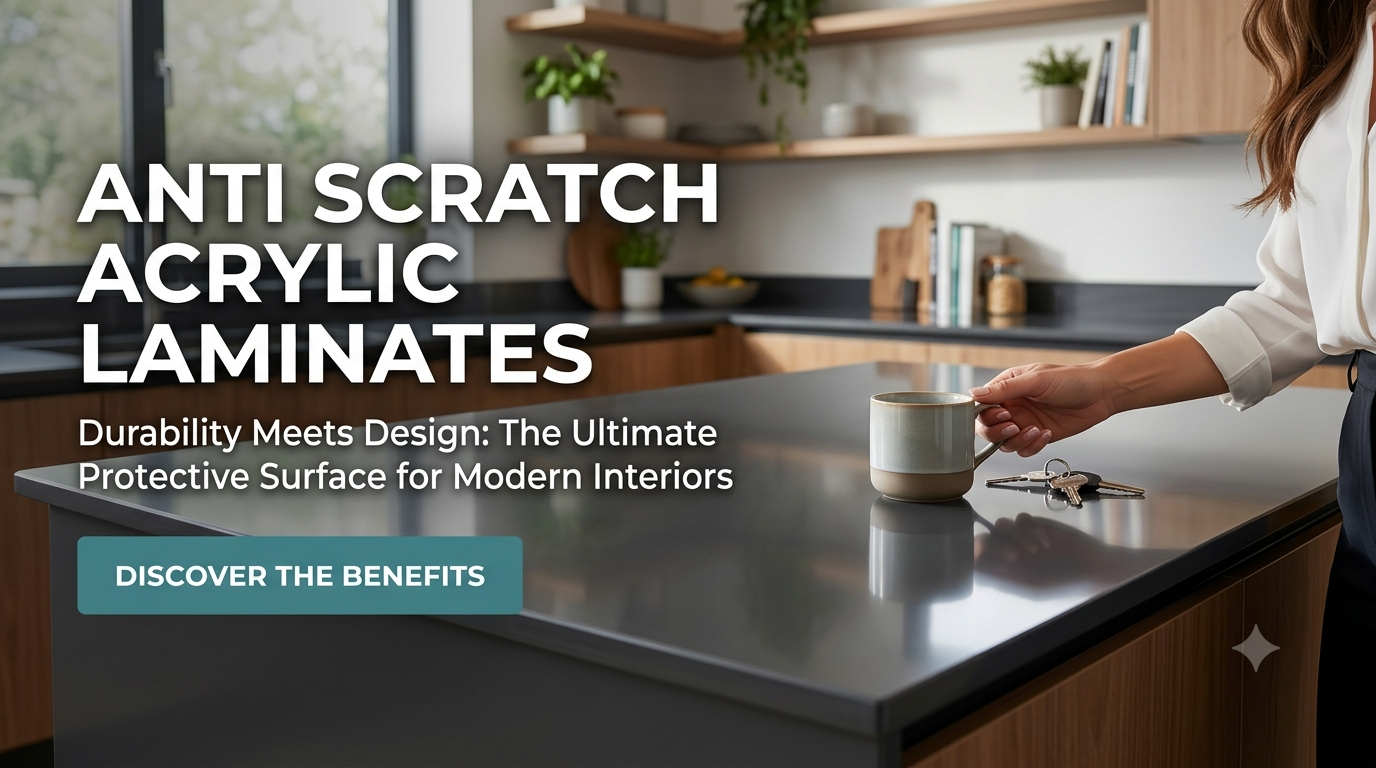
Anti Scratch Acrylic Laminates: The Complete Guide to Durable, High-Gloss Interior Surfaces
If you've ever run a hand across a stunning glossy cabinet only to notice a fine scratch weeks later, you already understand the problem anti scratch acrylic laminates were built to solve. Gloss surfaces are one of the most requested finishes in modern interiors — kitchens, wardrobes, TV units, feature walls — but ordinary high-gloss materials show every mark, swirl, and scuff almost immediately. That's frustrating when you've invested in a premium look.
At Ciscon Decor, we've been supplying laminates and mosaics since 1990. Over 34 years of working directly with architects, interior designers, and furniture manufacturers, we've watched scratch resistance move from a "nice to have" to the single most common question buyers ask before they commit to an anti scratch acrylic laminate. This guide walks through what these laminates actually are, how they resist wear, where they perform best, and what to check before you buy.
What Are Anti Scratch Acrylic Laminates ?
Anti scratch acrylic laminates are decorative surface sheets with a high-gloss acrylic facing engineered to resist surface scuffs, fine scratches, and everyday wear while retaining a mirror-like shine. They're typically bonded to MDF, plywood, or HDF substrates and used for cabinetry, wardrobes, and wall panels.
Unlike standard laminate sheets, the acrylic layer on a scratch resistant acrylic laminate is UV-stable and denser at the surface, which is what allows it to shrug off the light abrasions that dull ordinary glossy finishes over time.
Why Ordinary Glossy Surfaces Fail — And What Changes With Anti Scratch Acrylic Laminates ?
High gloss finishes reflect light beautifully, which is exactly why they're unforgiving. Every micro-scratch catches the light and becomes visible. This is the core trade-off buyers run into :
- Standard glossy laminates - stunning on day one, visibly dulled and scuffed within months of daily use in kitchens or high-traffic wardrobes.
- Anti scratch acrylic laminates - engineered facing resists the fine surface abrasion that causes dulling, so the shine holds up far longer under normal handling, cleaning, and contact.
We see this most often in kitchen cabinet fronts and wardrobe shutters — surfaces that get touched, wiped, and bumped daily. That's precisely where a scratch resistant acrylic laminate earns its cost difference over basic gloss options.
Key Properties That Make Acrylic Laminates Scratch Resistant
1. High Gloss, Mirror-Like Surface Layer
Our acrylic laminate sheets achieve a gloss rating in the 80–95% range, giving them a glass-like reflective quality without the fragility of actual glass.
2. UV-Stable Colour Retention
Ordinary surfaces yellow or fade under sunlight over time. Anti scratch acrylic laminates use UV-stable finishes, so colour and shine hold steady in rooms with natural light exposure.
3. Moisture and Stain Resistance
Because the surface is non-porous, it resists moisture ingress and staining — a major reason these laminates work well in kitchens, bathrooms, and other humid-prone spaces.
4. Substrate Flexibility
Acrylic laminate sheets bond well to MDF, plywood, or HDF, giving fabricators flexibility depending on the application — cabinetry, wall panelling, or furniture surfacing.
5. Available Thickness Range
Facing thickness generally runs between 0.8mm and 1.5mm, with thicker or solid-acrylic options available for specialty applications that need extra surface durability.
Where Anti Scratch Acrylic Laminates Are Used ?
- Modular kitchens - cabinet doors and shutters exposed to daily wiping, utensil contact, and moisture
- Wardrobe fronts and closet interiors - high-touch surfaces that need to stay scratch-free for years
- Bathroom vanities and splashbacks - where moisture resistance matters as much as shine
- Feature walls and wall panelling - large reflective surfaces that amplify light in a room
- Furniture surfaces, TV units, and display racks - both residential and commercial settings
How to Choose the Right Anti Scratch Acrylic Laminate ?
Short answer : Match gloss level, thickness, and substrate compatibility to how the surface will actually be used — high-traffic kitchen fronts need higher scratch resistance and moisture protection than a low-contact wall panel.
Here's the step-by-step approach we walk clients through :
1. Identify the application first. A kitchen shutter and a decorative wall panel have very different wear profiles — decide this before comparing finishes.
2. Check gloss level. Higher gloss (closer to 90-95%) shows scratches more readily on ordinary laminates, which is exactly why scratch resistant acrylic laminates matter more as gloss increases.
3. Confirm substrate compatibility. Make sure the sheet is designed to bond properly with your chosen backing — MDF, plywood, or HDF — for long-term adhesion.
4. Ask about edge sealing requirements. Scratch resistance protects the face, but unsealed edges are where moisture ingress typically starts.
5. Request samples before committing. Colour, texture, and gloss can look different under your specific lighting than they do in a catalogue photo.
Factors That Influence Acrylic Laminate Sheet Pricing
Pricing for premium acrylic laminates varies based on a few core factors rather than a single flat rate :
| Factor | How It Affects Cost |
|---|---|
| Sheet Thickness | Thicker facing or solid acrylic options cost more than standard 0.8–1.2mm facing. |
| Gloss Level | Higher gloss, mirror-reflective finishes typically sit at a premium. |
| Colour & Finish | Metallics, textures, and custom effects usually cost more than solid colours. |
| Substrate/Backing | Acrylic-faced MDF, plywood, or solid acrylic each affect the final price. |
| Sheet Size | Standard sizes (commonly 4 ft × 8 ft) vs. custom-cut dimensions can influence pricing. |
Because these variables shift the final number significantly, we always recommend requesting a project-specific quote rather than relying on a generic price list.
Installation and Care Tips for Long-Lasting Shine
- Ensure the substrate is flat, clean, and dry before installation
- Use proper edge banding or sealing to prevent moisture ingress at cut edges
- Avoid placing hot appliances directly on the surface — use heat pads
- Clean with a soft microfiber cloth and mild detergent only
- Avoid abrasive cleaners or steel wool, even on scratch resistant finishes
- Maintain moderate humidity and temperature around the installation to protect the gloss over time
Common Mistakes to Avoid
- Skipping edge sealing - this is the most common cause of premature moisture damage, not surface scratching
- Choosing gloss level based on photos alone - always request a physical sample
- Assuming "scratch resistant" means scratch-proof - these laminates resist everyday wear significantly better than standard gloss, but sharp or abrasive contact can still mark any acrylic surface
- Mismatching substrate to application - a wet-area application needs the right backing and sealing approach, not just the right laminate facing
Why Choose Ciscon Decor for Anti Scratch Acrylic Laminates ?
We've supplied laminates and mosaics since 1990, working across acrylic laminate, mirror acrylic sheets, liquid metal panels, UV marble sheets, and related decorative surface categories. A few things that set our approach apart :
- Quality control checks at every production stage to deliver durable, scratch-resistant, UV-resistant finishes
- A wide colour and finish palette so the final surface matches your design intent, not just the closest available option
- Transparent, project-specific pricing rather than opaque flat rates
- Direct support from selecting the right sheet type through to after-sales care
Conclusion
Anti scratch acrylic laminates solve the exact problem that makes high-gloss surfaces risky in the first place — they let you get the mirror-like shine you want without watching it dull within a year. Whether you're specifying surfaces for a modular kitchen, a wardrobe range, or a feature wall, matching gloss level, thickness, and substrate to the application is what determines how well that shine holds up.
Frequently Asked Questions
An anti scratch acrylic laminate is a high-gloss decorative surface sheet engineered with a durable acrylic facing that resists everyday scuffs and fine scratches while keeping its mirror-like shine, commonly used on kitchen cabinets, wardrobes, and wall panels.
No surface is fully scratch-proof. Scratch resistant acrylic laminates significantly outperform standard gloss laminates against everyday wear like wiping and light contact, but sharp or abrasive objects can still mark them.
Acrylic laminates use a denser, UV-stable acrylic facing that holds gloss and colour for longer than standard laminate sheets, which tend to dull and yellow faster under daily use and sunlight exposure.
High gloss acrylic laminates typically fall in the 80–95% gloss range, giving them a mirror-like, glass-effect finish suited to modern kitchens and feature walls.
They work best in modular kitchen cabinets, wardrobe fronts, bathroom vanities, feature walls, and furniture surfaces where a high-gloss finish faces regular contact or moisture exposure.
Yes. Acrylic laminate sheets are moisture-resistant and suitable for humid areas like bathrooms and kitchens, provided the edges are properly sealed during installation.
Facing thickness usually ranges from 0.8mm to 1.5mm, with thicker or solid-acrylic options available for applications requiring extra surface durability.
Acrylic laminate sheets commonly bond to MDF, plywood, or HDF substrates, depending on the intended application and structural requirements.
Wipe with a soft microfiber cloth and mild detergent. Avoid abrasive cleaners, steel wool, or direct heat contact to preserve the gloss and scratch resistance over time.
Pricing depends on thickness, gloss level, colour/finish complexity, substrate type, and sheet size, making project-specific quotations more accurate than flat pricing.